Commercial Flight License in Turkey
Getting a commercial flight license in Turkey allows aspiring pilots to transform their passion for aviation into a professional career. Turkey has become one of the leading destinations for commercial pilot training thanks to its internationally recognized flight schools, modern aircraft fleets, competitive training costs, and favorable weather conditions. Whether you aim to work for domestic airlines or international carriers, obtaining a Commercial Pilot License (CPL) in Turkey provides a solid foundation for a successful aviation career.
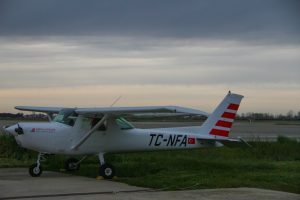 Why Choose Turkey for Commercial Flight Training?
Turkey has established itself as a prominent aviation training hub connecting Europe, Asia, and the Middle East. Every year, thousands of students enroll in Turkish flight academies to pursue professional pilot training.
Several factors contribute to Turkey’s growing popularity among future commercial pilots:
- Competitive tuition fees compared to Europe and North America
- Modern training aircraft equipped with advanced avionics
- Experienced flight instructors
- International-standard aviation regulations
- Excellent flying weather throughout much of the year
- High demand for airline pilots
- Comprehensive theoretical and practical training programs
Many Turkish aviation academies also offer English-language programs, making them accessible for international students.
Commercial Airplane License
A Commercial Airplane License, commonly referred to as a Commercial Pilot License (CPL), authorizes pilots to receive payment for flying aircraft professionally.
Unlike a Private Pilot License (PPL), which only permits recreational flying, a CPL opens the door to numerous aviation careers, including airline operations, charter services, cargo transportation, aerial surveying, flight instruction, and corporate aviation.
Commercial pilot training focuses on developing advanced flying skills, decision-making abilities, emergency procedures, navigation techniques, and professional aviation standards.
A complete Commercial Airplane License program generally includes:
- Aviation theory
- Meteorology
- Flight planning
- Air law
- Aircraft systems
- Human performance
- Instrument procedures
- Radio communication
- Multi-engine operations
- Night flying
Students gradually progress from basic maneuvers to complex commercial flight operations.
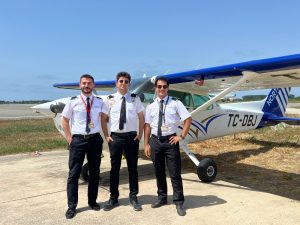 Commercial Flying License
The term Commercial Flying License is frequently used interchangeably with Commercial Pilot License. Both describe the certification required to operate aircraft professionally.
Commercial flying requires significantly higher proficiency than private aviation. Pilots must demonstrate advanced competencies in:
- Precision flying
- Cross-country navigation
- Instrument flying
- Emergency management
- Crew resource management
- Aviation safety procedures
- Operational planning
Training emphasizes consistency, discipline, and professionalism throughout every flight.
Requirements for a Commercial Flight License in Turkey
Applicants must satisfy several important requirements before beginning commercial pilot training.
Minimum Age
Most aviation authorities require applicants to be at least 18 years old before obtaining a Commercial Pilot License.
Educational Background
Most flight schools request:
- High school diploma
- Mathematics proficiency
- Physics knowledge
- English language skills
Some academies conduct entrance examinations before admission.
Medical Certificate
A Class 1 Aviation Medical Certificate is mandatory.
Medical evaluations examine:
- Vision
- Hearing
- Cardiovascular health
- Neurological condition
- General physical fitness
- Mental health
Maintaining medical fitness remains essential throughout a pilot’s career.
English Language Proficiency
English serves as the international language of aviation.
Students should possess adequate speaking, listening, reading, and communication skills before beginning flight training.
Training Stages
Commercial pilot training follows a structured learning path.
Ground School
Students begin with comprehensive classroom instruction covering aviation theory.
Subjects typically include:
- Air Law
- Meteorology
- Navigation
- Aircraft Performance
- Flight Planning
- Human Factors
- Operational Procedures
- Communications
- Aircraft General Knowledge
- Principles of Flight
Ground school provides the theoretical knowledge necessary for safe flight operations.
Flight Training
After completing theoretical instruction, students begin practical flight lessons.
Training gradually advances through several phases:
- Basic aircraft handling
- Solo flights
- Navigation exercises
- Cross-country flying
- Instrument training
- Night operations
- Emergency procedures
- Commercial flight maneuvers
Each stage builds confidence and operational competence.
Simulator Training
Modern flight simulators replicate real-world flying conditions with remarkable accuracy.
Simulator sessions allow students to practice:
- Engine failures
- Severe weather
- Instrument approaches
- Navigation challenges
- Emergency checklists
- Crew coordination
Simulator training significantly enhances safety while reducing operational costs.
Skill Test
The final assessment includes an official flight examination.
Candidates demonstrate their ability to:
- Operate the aircraft safely
- Manage abnormal situations
- Communicate effectively
- Navigate accurately
- Follow aviation regulations
- Make sound operational decisions
Successfully passing the examination results in the issuance of the Commercial Pilot License.
Typical Commercial Pilot Training Timeline
Although every student’s progress differs, the following table summarizes the general training process.
| Training Stage | Average Duration | Primary Focus |
|---|---|---|
| Ground School | 4–6 months | Aviation theory |
| Basic Flight Training | 4–6 months | Aircraft handling |
| Cross-Country Flying | 1–2 months | Navigation |
| Instrument Training | 2–3 months | IFR operations |
| Multi-Engine Training | 1 month | Advanced aircraft systems |
| Skill Test | Several days | Final evaluation |
Training duration depends on weather, aircraft availability, student performance, and academy scheduling.
Aircraft Used During Training
Turkish flight schools typically operate modern training aircraft suitable for beginner and advanced pilots.
Common aircraft categories include:
- Single-engine trainers
- Glass cockpit aircraft
- Multi-engine airplanes
- Instrument training aircraft
Students become familiar with different cockpit technologies and flight environments before graduation.
Career Opportunities After Graduation
Earning a Commercial Flight License in Turkey opens multiple career pathways within the aviation industry.
Graduates may pursue careers such as:
- Airline First Officer
- Cargo Pilot
- Charter Pilot
- Corporate Pilot
- Air Ambulance Pilot
- Agricultural Aviation Pilot
- Flight Instructor
- Ferry Pilot
- Survey Pilot
- Aerial Photography Pilot
Many pilots continue accumulating flight hours before applying to major airlines.
Airline Career Progression
Professional pilots usually advance through several career stages.
A common progression includes:
- Flight School Graduate
- Commercial Pilot
- Flight Instructor or Charter Pilot
- Regional Airline First Officer
- Airline Captain
- Training Captain
- Examiner or Fleet Manager
Continuous learning and recurrent training remain essential throughout a pilot’s career.
Estimated Training Costs
Commercial pilot training represents a significant investment.
Costs generally include:
- Ground school
- Flight hours
- Simulator sessions
- Examination fees
- Medical certification
- Study materials
- Uniforms
- Licensing fees
Turkey often offers lower training costs than many Western European countries while maintaining high educational standards.
Prospective students should request a detailed quotation from their chosen academy before enrollment.
Advantages of Training in Turkey
Turkey offers several unique advantages for commercial aviation students.
These include:
- Strategic geographic location
- Modern aviation infrastructure
- International airports
- Diverse airspace
- Competitive pricing
- Highly experienced instructors
- English-language programs
- Growing aviation sector
These strengths make Turkey attractive to both domestic and international students.
Skills Every Commercial Pilot Should Develop
Professional flying requires more than technical knowledge.
Successful commercial pilots continuously improve:
- Situational awareness
- Decision-making
- Leadership
- Communication
- Time management
- Workload management
- Stress management
- Problem-solving
- Professional discipline
These competencies contribute directly to safe flight operations.
Expert Tip
Many students focus only on passing flight examinations. However, airlines also evaluate professionalism, communication, teamwork, and attitude during recruitment.
Building strong English communication skills, maintaining excellent study habits, and developing disciplined cockpit procedures from the beginning significantly improve future employment opportunities.
Important Considerations
Before enrolling in any commercial pilot program, carefully evaluate several important factors.
Consider the following:
- Instructor experience
- Aircraft maintenance standards
- Fleet availability
- Student success rates
- Graduate employment statistics
- Simulator quality
- Training schedule flexibility
- International recognition of licenses
Choosing a reputable academy can positively influence your entire aviation career.
Common Mistakes Students Make
Many aspiring pilots make avoidable mistakes during their training journey.
Choosing Based Only on Price
Lower tuition does not always mean better value. Training quality should remain the primary consideration.
Ignoring English Proficiency
Strong aviation English is essential for international operations and airline interviews.
Underestimating Ground School
Theoretical knowledge supports every practical flight. Students should devote equal attention to classroom learning.
Inconsistent Study Habits
Successful pilots study continuously instead of preparing only before examinations.
Neglecting Physical Health
Maintaining medical fitness is just as important as developing flying skills.
Future Demand for Commercial Pilots
Global aviation continues to recover and expand.
Increasing passenger demand, fleet growth, aircraft deliveries, and pilot retirements contribute to strong long-term demand for qualified commercial pilots.
Students beginning training today may find numerous employment opportunities across passenger airlines, cargo carriers, business aviation companies, and specialized flight operations.
How to Select the Right Flight School
Choosing the right academy significantly influences training quality.
Evaluate each school based on:
- Regulatory approvals
- Instructor qualifications
- Aircraft availability
- Safety record
- Graduate success
- Student reviews
- Simulator technology
- Airline partnerships
- Training philosophy
Visiting the campus before enrollment often provides valuable insight into the learning environment.
Building Flight Hours After Graduation
Many newly licensed commercial pilots continue building experience before joining major airlines.
Popular hour-building opportunities include:
- Flight instruction
- Charter operations
- Banner towing
- Survey flying
- Aerial photography
- Cargo operations
- Regional airlines
Accumulating diverse flight experience improves employability and confidence.
A Commercial Flight License in Turkey provides aspiring aviators with internationally competitive training, modern aviation facilities, experienced instructors, and access to a growing global aviation industry. Students who commit themselves to disciplined study, consistent flight practice, and continuous professional development position themselves for rewarding careers in commercial aviation. Choosing a reputable flight academy and maintaining high standards throughout training remain the keys to long-term success.
Bizi instagramdan takip edin: northfly
Frequently Asked Questions
Most students complete their commercial pilot training within 18 to 24 months, depending on weather conditions, aircraft availability, and individual progress.
Yes. Many Turkish flight academies welcome international students and offer English-language training programs that meet international aviation standards.
Yes. English is the official language of international aviation. Strong communication skills greatly improve both training performance and future airline employment opportunities.
Graduates can pursue careers as airline pilots, charter pilots, cargo pilots, corporate pilots, flight instructors, air ambulance pilots, aerial survey pilots, and many other aviation professionals.