How to Become a Pilot in İstanbul: Step-by-Step Local Guide
Becoming a pilot in İstanbul is one of the most structured yet rewarding career paths in the aviation industry. Turkey’s aviation sector continues to grow rapidly, and İstanbul stands at the center of this expansion with its world-class airports and flight academies.
If you are searching for How to Become a Pilot in İstanbul: Step-by-Step Local Guide, this article breaks down everything from eligibility requirements to choosing the right flight school and completing your license successfully.
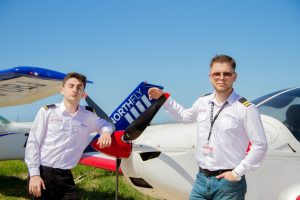 Best Flight Schools in İstanbul
Choosing the right flight school is one of the most important steps in your aviation journey. İstanbul offers several reputable training institutions that meet international aviation standards and are approved by the Directorate General of Civil Aviation (SHGM).
Some of the most recognized flight training institutions include:
- Turkish Airlines Flight Academy (TAFA)
- Atlas Flight Academy
- Istanbul Flight Academy
- Anadolu University Aviation Training Programs (nearby but widely preferred)
- Private integrated flight schools affiliated with airlines
These schools provide modular and integrated pilot training programs depending on your career goals.
What Makes a Good Flight School?
When selecting a school, focus on:
- SHGM or EASA certification compliance
- Fleet quality and simulator availability
- Instructor experience (especially airline background instructors)
- Student-to-aircraft ratio
- Internship and airline placement opportunities
Choosing a certified flight school is critical because it directly affects your license validity and career opportunities.
Training Environment in İstanbul
İstanbul provides an excellent aviation environment due to:
- High air traffic exposure at major airports like Istanbul Airport (IST)
- Diverse weather conditions for real-world training experience
- Access to advanced simulation centers
- Strong aviation ecosystem and airline headquarters
This makes İstanbul one of the most strategic locations in Europe for pilot training.
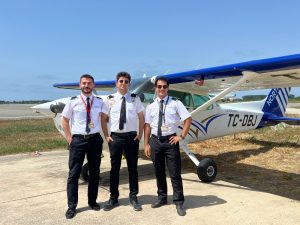 Pilot Training Requirements in İstanbul
Understanding the requirements is essential before starting your aviation journey. To begin pilot training in İstanbul, you must meet several medical, educational, and personal criteria.
Basic Requirements
To enroll in most flight schools in İstanbul, you generally need:
- Minimum age: 18 years
- High school diploma (some programs prefer university level)
- English proficiency (ICAO Level 4 or higher)
- Clean criminal record
- Strong motivation for aviation career
Medical Requirements
Aviation medicine is strict because safety is the top priority. You must obtain a Class 1 Medical Certificate approved by aviation authorities.
This includes:
- Vision test (with or without correction depending on conditions)
- Hearing test
- Cardiovascular evaluation
- Psychological assessment
Without a Class 1 Medical Certificate, you cannot start commercial pilot training in Turkey.
English Language Requirement
English is the international aviation language. You must be able to:
- Communicate clearly with air traffic control
- Understand aviation terminology
- Pass ICAO English proficiency exams
Educational Background
While a university degree is not always mandatory, it significantly increases your chances of airline employment. Many pilots in Turkey prefer aviation-related degrees such as:
- Aeronautical Engineering
- Aviation Management
- Pilot Training Programs
Step-by-Step Pilot Training Process in İstanbul
Becoming a pilot requires discipline and structured progression. Here is the typical path followed in İstanbul flight schools.
Ground School Training
This is the theoretical foundation stage. You will study:
- Aerodynamics
- Meteorology
- Air law
- Aircraft systems
- Navigation
- Human performance
This phase builds the academic knowledge required for safe flying.
Flight Training Phase
After theory, you begin actual flight training:
- Dual flights with instructor
- Solo flights
- Cross-country navigation flights
- Emergency procedures training
Students typically fly Cessna 172 or similar training aircraft.
Simulator Training
Modern flight schools in İstanbul use advanced simulators that replicate:
- Engine failures
- Bad weather conditions
- Instrument flight rules (IFR) scenarios
This helps students prepare for real-world emergencies safely.
Licensing Exams
To become a certified pilot, you must pass:
- Written exams
- Flight skill tests
- Radio communication exams
Once completed, you can obtain your Commercial Pilot License (CPL).
Cost of Pilot Training in İstanbul
Pilot training is a significant financial investment. Costs vary depending on the school and program type.
| Training Stage | Estimated Cost (EUR) | Description |
|---|---|---|
| Private Pilot License (PPL) | – | Basic flying license |
| Commercial Pilot License (CPL) | – | Professional pilot training |
| Integrated Airline Program | – | Full airline-ready training |
| Type Rating (Airbus/Boeing) | – | Aircraft-specific training |
Most students in İstanbul choose integrated programs because they shorten the path to airline employment.
Career Opportunities After Pilot Training
Once you complete How to Become a Pilot in İstanbul: Step-by-Step Local Guide, multiple career paths become available.
Airline Pilot
You can work for major Turkish airlines such as:
- Turkish Airlines
- Pegasus Airlines
- SunExpress
These airlines offer strong career growth and international routes.
Cargo Aviation
Cargo airlines are expanding rapidly due to global e-commerce growth. This sector offers:
- Stable flight schedules
- Long-haul experience
- Competitive salaries
Charter and Private Flights
You can also work in:
- Private jet operations
- VIP transport services
- Business aviation companies
Flight Instructor
Experienced pilots often become instructors, teaching new students and building flight hours.
Uzman İpucu
Start your English training early and maintain ICAO aviation communication standards throughout your studies. Many candidates fail airline recruitment not because of flying skills, but due to insufficient English proficiency.
- Do not delay medical certification
- Choose only SHGM-approved flight schools
- Avoid schools without simulator facilities
- Plan your financial budget realistically
- Maintain physical and mental fitness during training
Ignoring medical or language requirements can stop your pilot career before it even starts.
Many aspiring pilots in İstanbul make common mistakes such as:
- Choosing schools based only on price
- Underestimating theoretical exams
- Ignoring English proficiency training
- Not preparing for long study duration
- Expecting quick airline employment
The aviation industry demands patience, discipline, and continuous learning.
Additional Subheading: Medical and Psychological Evaluation Process
The medical evaluation is not just a formality. It ensures pilots can handle stress, fatigue, and emergency situations.
Key checks include:
- Mental resilience testing
- Stress tolerance evaluation
- Sleep pattern assessment
- Cognitive reaction tests
Psychological stability is as important as technical flying skills.
Additional Subheading: Timeline to Become a Pilot in İstanbul
The entire process usually takes:
- Private Pilot License: 6–12 months
- Commercial Pilot License: 18–24 months
- Airline readiness (including experience building): 2–4 years total
Most students become airline-ready pilots within 3 years if they follow a structured program.
Why İstanbul is a Strong Choice for Pilot Training
İstanbul offers unique advantages:
- Two major international airports
- Strong airline ecosystem
- Advanced aviation infrastructure
- High flight traffic exposure
- Experienced instructors from global airlines
This combination makes İstanbul one of the best aviation training hubs in the region.
Bizi instagramdan takip edin: northfly
FAQs
You must be at least 18 years old to start commercial pilot training in İstanbul flight schools.
It typically takes 2 to 3 years to become a commercial pilot, depending on training intensity and program type.
No, but having a university degree improves your chances of being hired by airlines, especially Turkish Airlines.
Yes, it is a high-cost career path, ranging from 35,000 € to over 100,000 € depending on the program.