Airline Pilot ATPL Trainings


SPECIAL ATPL TRAINING for cabın attendants
 The Nearest Training Period: February 16, 2026
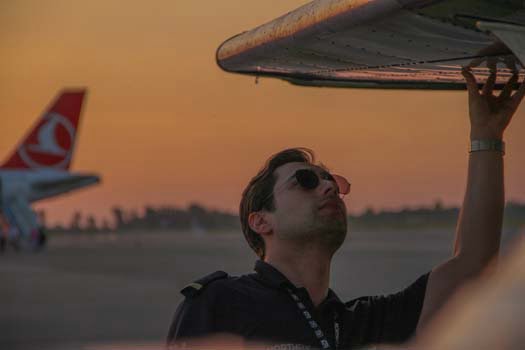
Wouldn’t you like to transfer your years of cabin experience to the cockpit, get pilot training and become a pilot in a prestigious airline company?
With the ATPL (Airline Transport Pilot License) Training Program, which we have specially developed for cabin crew candidates, we aim to bring you to your pilot dreams while working. This program, which includes 700+ Hours of Theoretical and 200+ Hours of Flight Training, is tailor-made for cabin crew members and brings along personalized training, flight planning, virtual classroom training and the opportunity to fly in different locations. If you want to reflect your cabin crew experience to the cockpit and be in the captain’s chair behind the door, this training is for you!

Free Accommodation
Global Opportunities
Personal Training Planning
Different Airplane Experience

Education Content

16 – 18 months
Duration of Training

210 + hours
Flight Training

700 + hours
Theoretical Education

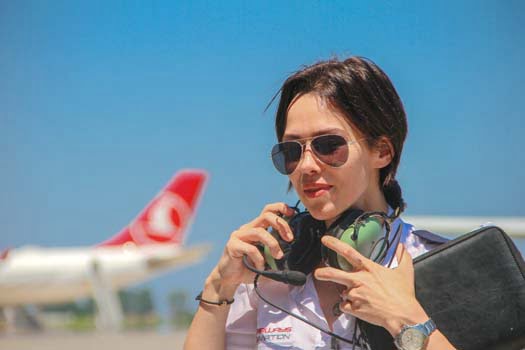


Airline Transport Pilot License – ATPL Modular Training
The required license type for those who choose aviation as a profession and want to make the sky their office is the ATPL, or Airline Transport Pilot License. Whether you aspire to be an airline pilot, a private jet pilot, or engage in various commercial activities with a multi-engine aircraft, you need to complete ATPL training. In our flight school, this program is offered modularly, allowing you to progress in sync with your work or school life. Considering factors such as personal study performance, exam processes, and meteorology, the program lasts between 14-18 months.
Stages of ATPL Modular Training:
Training is provided in packages/modules and consists of different stages.
These stages are:
Medical Report:
The first stage of modular ATPL training, the PPL training, requires pilot candidates to obtain a medical report before the theoretical training at the latest after enrollment. The medical report must be obtained from hospitals authorized by the Civil Aviation Authority. If a candidate is unable to obtain the report due to health issues, their registration will be canceled free of charge. For the first stage of training, PPL(A), PIC, and NVFR, a Class 2 medical certificate is sufficient. However, before advancing to the second stage and obtaining a commercial pilot license, candidates must have a Class 1 medical certificate. Our flight school recommends that ATPL course applicants obtain a Class 1 medical certificate from the beginning of the training. For more information about medical certificates, you can contact our flight school.
English Language Proficiency:
A language proficiency certificate is not required for enrollment in the ATPL modular training program. Candidates who do not have English language proficiency can enroll in an English course after registering and must pass a language proficiency test before the commercial pilot training stage. Our flight school provides support for candidates who need to obtain English language proficiency before obtaining their commercial pilot license. For more information, please contact our support center.
Flight Hours During ATPL Training
Throughout the training, student pilots complete a total of 217 flight hours, including check flights.
Career Opportunities
- Airline Pilot
- Cargo & Transport Pilot
- Private Jet Pilot
Who Can Apply?
- At least 17 years old
- No Criminal Record
Frequently Asked Questions
Does airline experience provide an advantage in pilot recruitment after ATPL?
Yes. Airline experience is considered a significant advantage in pilot recruitment, as it demonstrates operational knowledge, crew coordination, and aviation culture.
Can I start ATPL training while working as a cabin crew member?
Yes. Cabin crew members can start ATPL training while actively working. With flexible and modular planning, training can be arranged to fit your flight schedule.
What class should the medical certificate be?
A Class 1 medical certificate is required for CPL(A), IR(A), and ME(A) training, while a Class 2 medical certificate is sufficient for PPL(A), PIC, and NVFR training.
Does cabin crew experience provide an advantage in ATPL training?
Yes. Cabin crew experience provides a strong advantage in terms of aviation knowledge, operational awareness, and airline discipline during ATPL training.
Is a Class 1 Medical Certificate mandatory for cabin crew members?
Yes. A valid Class 1 Medical Certificate obtained from DGCA (SHGM) authorized hospitals is mandatory before starting flight training.
Does working in a shift-based system prevent me from attending ATPL training?
No. Shift-based or rotational work schedules do not prevent participation in ATPL training when a modular and flexible training structure is applied
Is there an age limit for cabin crew members applying for ATPL training?
There is no specific upper age limit for ATPL training. Candidates must meet the minimum age requirements and successfully obtain a Class 1 Medical Certificate.
How can I plan ATPL training while having an active flight schedule?
ATPL training can be planned around your roster. Flight training and theoretical courses can be scheduled flexibly based on your availability.
What is the difference between Modular ATPL and Integrated ATPL?
In modular training, the training stages can be completed at different institutions and spread over time. In integrated training, all stages are combined and must be completed continuously at a single institution.
How long does ATPL training take?
The duration of the training varies depending on the student’s availability, exam performance, and meteorological conditions, but it generally takes around 16-18 months.
How many flight hours will I have completed at the end of the Modular ATPL training?
Upon completing the training, including check flights, you will have accumulated a total of 217:00 flight hours.
Can I complete the ATPL program on a modular basis?
Yes. The ATPL program can be completed modularly, allowing candidates to progress step by step alongside their professional commitments.
Do I need to know English for ATPL training?
English is not required during the first 4 months of training, but before commercial pilot training, you must achieve ICAO Level 4 proficiency. It is recommended to improve your English skills throughout the training.

Fill Out the Form
Fill out the form on this page to get detailed information.

Get Information
Our team will call you to provide detailed information.

Consult with Experts
Meet with our experts and plan your training.

Register
Complete your registration with the required documents and take off towards your dreams!