How to Become a Pilot in Turkey: A Complete Roadmap for Future Aviators
If you are wondering how to become a pilot in Turkey, the journey generally starts with meeting the required eligibility conditions, choosing an approved flight school, completing theoretical and practical flight training, obtaining the appropriate pilot licence, and building the experience required for a professional aviation career. Turkey offers a structured aviation training environment with flight academies, universities and integrated pilot training programmes for candidates who want to become commercial pilots.
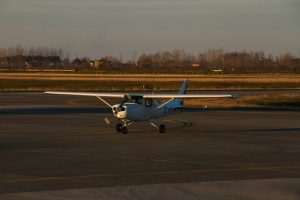
Starting Aviation Training in Turkey: Where Should an Aspiring Pilot Begin?
Becoming a pilot requires more than learning how to control an aircraft. Future aviators need to understand aviation regulations, meteorology, navigation, aircraft systems, human factors, communication procedures and flight safety. For this reason, candidates should approach pilot training as a long-term professional development process rather than simply a flight experience.
The first step involves checking whether you meet the requirements for the licence you want to pursue. Your age, education, medical fitness, English proficiency and training pathway can affect which route makes sense for you. Candidates who want to fly professionally usually follow a more comprehensive programme than those who only want to fly recreationally.
Turkey has several routes into aviation. A candidate can study aviation at a university, enrol in a flight academy or select an integrated commercial pilot training programme. Each option creates a different academic and professional experience, so comparing the structure, total cost, aircraft fleet, training location and career opportunities can help you make an informed decision.
Understanding the Turkish Aviation Training Environment
The Directorate General of Civil Aviation, commonly known as SHGM in Turkey, oversees civil aviation activities and establishes regulatory requirements for pilot licensing and approved training organisations. Candidates should therefore verify that their chosen training provider operates within the applicable regulatory framework.
Aviation training normally combines classroom education with simulator sessions and actual flight hours. The exact programme depends on the licence and training route, but professional candidates should expect a demanding schedule that requires consistent study outside the cockpit.
Important areas of pilot education include:
- Aerodynamics and aircraft performance
- Air law and aviation regulations
- Meteorology
- Navigation
- Radio communication
- Human performance and limitations
- Flight planning
- Aircraft systems
- Operational procedures
- Principles of flight
- Emergency procedures
- Crew resource management
English also plays a major role in aviation. International aviation communication relies heavily on English, while pilots operating internationally need to understand aviation terminology, radio phraseology and operational documentation.
Choosing Between University and Flight Academy Training
One of the most important decisions involves choosing an education model. A university aviation programme can combine academic education with professional flight training, while a dedicated flight academy may focus more directly on licence-oriented training.
Neither route automatically guarantees an airline position. Airlines evaluate several factors, including licence status, flight experience, technical knowledge, English proficiency, simulator performance and performance during recruitment assessments.
A university route may appeal to students who want a broader academic background. An academy route may suit candidates who want to concentrate specifically on professional flight training.
Pilot Licences, Training and Career Choices: Mapping Out Your Turkish Aviation Journey
The type of licence you pursue determines much of your training roadmap. A person interested in recreational flying does not need exactly the same qualifications as someone targeting an airline cockpit.
The Private Pilot Licence, or PPL, provides a foundation for pilots who want to fly for non-commercial purposes. Professional candidates generally continue toward qualifications such as the Commercial Pilot Licence and eventually the Airline Transport Pilot Licence pathway.
For an aspiring airline pilot, the journey can include:
- Initial aviation theory
- PPL-level flight training
- Commercial pilot training
- Instrument rating
- Multi-engine training
- Multi-crew training
- Airline Transport Pilot Licence theory
- Required examinations
- Flight experience building
- Airline selection and assessment
- Type rating and aircraft-specific training
The precise sequence can vary according to the selected training programme and regulatory requirements.
PPL: Building the First Practical Foundation
The PPL represents an important milestone because it introduces students to the fundamentals of professional cockpit discipline. During training, students learn how to operate an aircraft, communicate with air traffic control, navigate, manage flight planning and respond to abnormal situations.
However, a PPL alone does not create an airline pilot. Candidates who want a professional aviation career need to continue their education and accumulate the qualifications and experience required for commercial operations.
CPL and Instrument Training
The Commercial Pilot Licence represents a major transition toward professional aviation. Candidates develop more advanced flight skills and learn to operate within the standards expected from commercial pilots.
Instrument training adds another critical dimension. Instead of relying primarily on external visual references, pilots learn to interpret and use cockpit instruments while following instrument flight procedures. This capability becomes particularly important for airline operations because commercial aviation frequently operates under instrument flight rules.
Multi-Engine and Multi-Crew Training
Airline aviation involves sophisticated aircraft, complex operating environments and coordinated cockpit procedures. Multi-engine training introduces pilots to aircraft with more than one engine, while multi-crew training focuses on cooperation between pilots.
Modern airline operations rely heavily on Crew Resource Management. Pilots must communicate clearly, distribute tasks effectively, monitor aircraft systems and make sound decisions under pressure.
A technically strong pilot still needs excellent communication and teamwork skills. Airlines therefore assess much more than raw flying ability during recruitment.
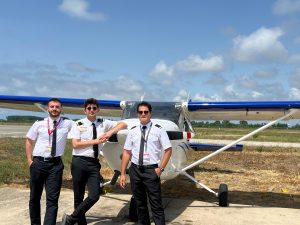
The Medical Certificate: A Critical Step Before Major Investment
One of the smartest decisions an aspiring pilot can make involves completing the appropriate aviation medical examination early in the process. Candidates should understand their medical eligibility before committing substantial time and money to professional training.
Medical standards can involve vision, hearing, cardiovascular health, neurological factors and other areas relevant to flight safety. The required medical certificate depends on the licence and operational role.
Do not wait until you have invested heavily in flight training before checking your professional aviation medical eligibility.
Aviation medical assessment does not simply measure whether someone feels healthy. It evaluates specific standards relevant to safe flight operations, and candidates should consult an authorised aviation medical examiner for an official assessment.
How Much Does Pilot Training in Turkey Cost?
The total cost of becoming a professional pilot varies considerably. Training fees depend on the institution, aircraft type, fuel prices, simulator requirements, accommodation, examination expenses, licence fees, additional flight hours and exchange-rate conditions.
Candidates should avoid comparing schools solely according to their advertised headline price. A lower initial price can change significantly if a student requires additional flight hours or if certain expenses sit outside the advertised package.
Before enrolling, ask for a detailed cost structure covering:
- Registration and tuition fees
- Flight training
- Simulator sessions
- Examination fees
- Licence-related expenses
- Medical examinations
- Accommodation
- Transportation
- Training materials
- Additional flight hours
- Potential retest costs
- Type rating or airline-specific expenses where applicable
A transparent financial plan makes the training process considerably easier to manage.
How Long Does It Take to Become a Pilot?
The duration depends on the training programme, individual progress, scheduling, weather, aircraft availability and examination performance. An intensive integrated programme can move a candidate through training more quickly than a part-time route, but aviation training does not follow exactly the same timeline for every student.
Weather can affect flight schedules, particularly at airports where meteorological conditions frequently change. Aircraft maintenance, instructor availability and airspace restrictions can also influence the training calendar.
Focus on completing training to the required standard rather than trying to finish as quickly as possible.
Aviation rewards consistency. Strong theoretical knowledge and reliable cockpit habits provide a much more valuable foundation than simply completing the minimum timeline.
Building English and Communication Skills
English proficiency represents one of the most important non-technical skills for aspiring airline pilots. Aviation communication uses standard terminology, phraseology and procedures, while pilots also need to understand technical manuals, weather information and operational documents.
Students can improve their aviation English by regularly listening to authentic aviation communications and practising standard phraseology. Reading aircraft manuals and aviation publications can also expand technical vocabulary.
Useful areas to practise include:
- ATC phraseology
- Aviation terminology
- Listening comprehension
- Technical English
- Emergency communication
- Crew coordination language
- Situational communication
The goal involves more than memorising vocabulary. Pilots need to communicate accurately and efficiently, particularly when workload increases.
From Flight School to Airline Cockpit
Completing pilot training represents an important achievement, but it does not automatically lead to an airline job. Graduates may need to complete airline recruitment processes that assess technical knowledge, English, aptitude, teamwork, situational judgement and simulator performance.
Airline recruitment can include several stages. Candidates should therefore prepare well beyond their licence examinations.
A typical selection process may involve:
- Application and document screening
- English assessment
- Cognitive or aptitude testing
- Technical examination
- Competency-based interviews
- Group or teamwork exercises
- Simulator assessment
- Medical and background procedures
The recruitment process differs between airlines and can change over time. Candidates should always check the current requirements directly with the airline or training organisation.
Career Paths After Pilot Training
Professional aviation offers several possible career directions. Many candidates immediately think about airline flying, but pilots can pursue different roles depending on their qualifications and experience.
Potential career paths include:
| Career Path | Main Focus | Typical Development |
|---|---|---|
| Private Pilot | Personal and non-commercial flying | PPL and additional ratings |
| Commercial Pilot | Professional flight operations | CPL and relevant ratings |
| Airline First Officer | Multi-crew airline operations | ATPL pathway and airline training |
| Flight Instructor | Training new pilots | Instructor qualification and experience |
| Corporate Pilot | Business aviation | Advanced aircraft and operational experience |
| Cargo Pilot | Freight transportation | Commercial and multi-crew experience |
| Airline Captain | Command responsibility | Significant flight experience and airline progression |
The aviation industry also creates opportunities outside the cockpit. Experienced aviation professionals can move into flight operations, safety, training, dispatch, aviation management or other specialised areas.
Expert Tip: Think Like an Airline Before You Apply
A strong strategy involves developing the qualities airlines expect from the beginning of training. Do not treat the licence as the final destination.
Maintain organised training records, develop disciplined study habits and take every briefing seriously. Build strong communication skills and learn to evaluate your own performance objectively after each flight.
It also helps to understand the difference between technical skill and operational competence. A professional pilot needs both.
Things to Consider Before Choosing a Flight School
Selecting a flight school represents a major financial and professional decision. Visit the organisation when possible and examine its training environment rather than relying exclusively on online advertising.
Consider factors such as:
- Fleet size and aircraft availability
- Aircraft age and maintenance practices
- Instructor experience
- Student-to-instructor ratio
- Simulator access
- Average training duration
- Training locations
- Weather conditions
- Examination support
- Graduate outcomes
- Transparent pricing
- Accommodation options
- International recognition of qualifications
Ask the school to explain exactly what its advertised training price includes.
A clear contract and transparent training plan can prevent unpleasant financial surprises later.
Common Mistakes Future Pilots Make
Some candidates concentrate almost entirely on the cost of training. Although finances matter, the cheapest programme does not necessarily produce the most predictable training experience.
Another common mistake involves postponing English practice. Aviation communication becomes much easier when candidates develop language skills before entering advanced training.
Other frequent mistakes include:
- Choosing a school without researching its training structure
- Ignoring the importance of the aviation medical examination
- Underestimating theoretical examinations
- Treating simulator training as less important than aircraft training
- Focusing only on flight hours
- Failing to research airline recruitment requirements
- Assuming a pilot licence guarantees employment
- Creating a budget without contingency funds
The best approach combines regulatory awareness, financial planning, technical preparation and realistic career expectations.
A Practical Roadmap for Future Aviators
If your goal involves becoming a professional pilot in Turkey, you can structure the journey into clear stages.
Start with eligibility. Review age, education, medical and language requirements before committing to a programme.
Choose the right training route. Compare universities and flight academies according to curriculum, fleet, training structure, costs and career preparation.
Build your theoretical foundation. Treat aviation theory as an essential part of becoming a safe and knowledgeable pilot.
Develop practical skills. Use every flight and simulator session to improve decision-making, situational awareness and cockpit discipline.
Complete the required licences and ratings. Follow the regulatory pathway relevant to your intended aviation career.
Prepare for airline recruitment. Develop English, technical knowledge, communication, teamwork and simulator skills.
Continue learning after employment. Aviation remains a profession of continuous training, recurrent checks and professional development.
Bizi instagramdan takip edin: northfly
FAQs
The timeline varies according to the training route, programme intensity, weather, aircraft availability and individual progress. An integrated professional programme can provide a structured pathway, while other routes may take longer.
There is no single fixed cost because training prices vary between schools and programmes. Candidates should calculate tuition, flight hours, simulator training, medical examinations, accommodation, examination expenses and possible additional training costs.
English plays an important role in professional aviation. Pilots need to understand aviation terminology, communicate effectively and meet the language standards applicable to their licence and operational environment.
Flight school provides the qualifications and training required for the applicable professional pathway, but employment depends on meeting airline-specific recruitment requirements. Airlines can assess technical knowledge, English, aptitude, teamwork, simulator performance and other criteria during selection.